


Beautiful Surfaces, Made More Responsibly
For more than 50 years, our products have set the standard — in shops and hotels, hospitals and schools, museums and homes across the world. The question we keep returning to is a simple one: can the way we make them meet that same standard?
It is easy to talk about sustainability. It is harder to invest in it, measure it, and keep working at it year after year. We are committed to responsible development that respects our environment today without compromising tomorrow, and that commitment runs from the renewable energy that powers us to the locally sourced minerals we build with. It is worth pausing to look at what that work actually delivers.
Energy we generate, energy we use
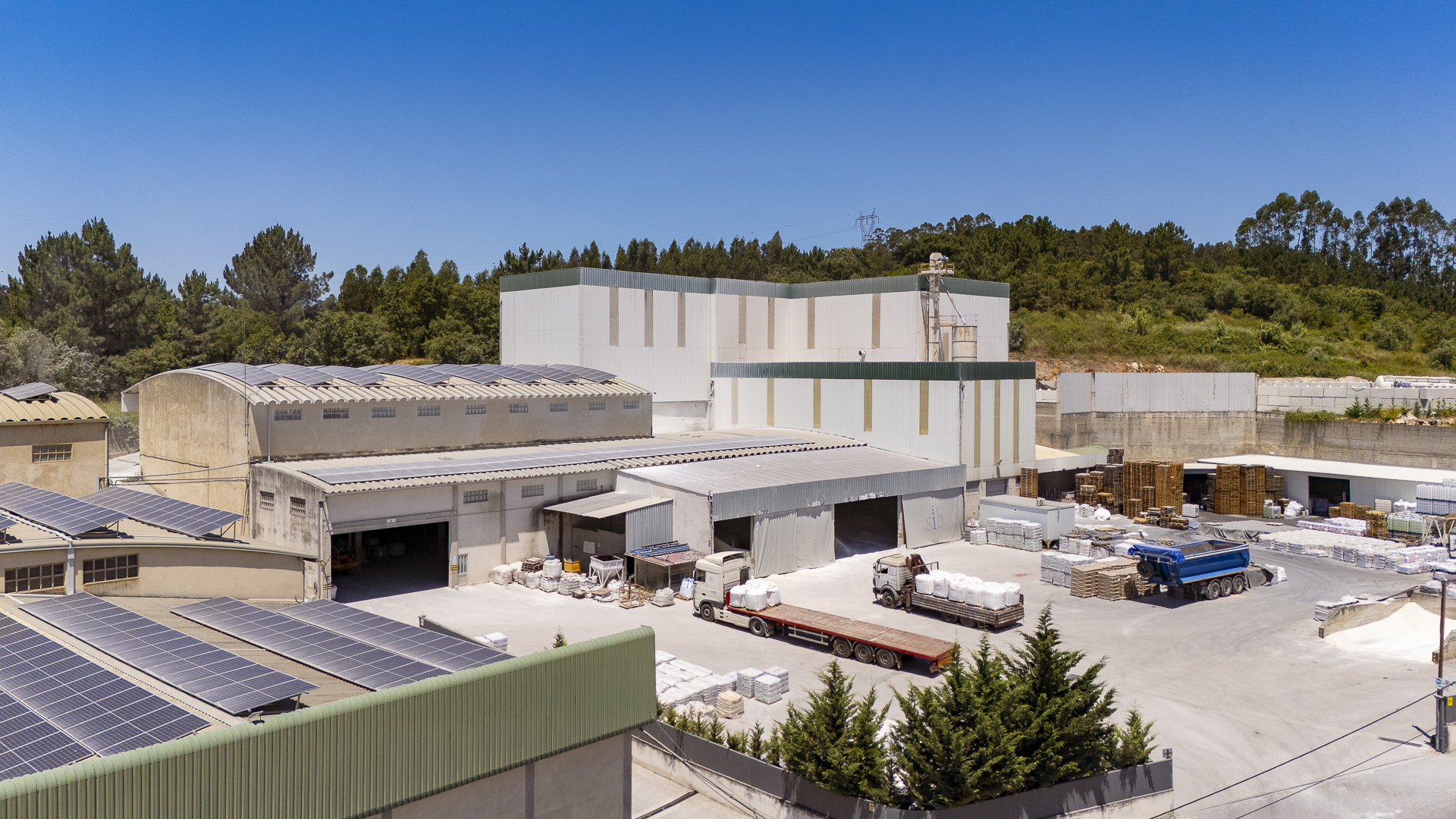
At the heart of our operations in Leiria, Portugal, sits a 249.90 kWp solar installation, working alongside energy-efficiency upgrades across our stone-crushing and manufacturing facilities. These are not recent additions or a one-off gesture. They are part of how we run, and we track their performance all the time.
Three figures tell the clearest story.
The first is self-consumption: 91%. Of all the solar energy our panels generate, almost all of it is used directly on site, powering the very processes that produce our products. Solar capacity only matters if you actually use what you make, and we do.
The second is energy autonomy: 37%, over a third of everything we use. That much of our total energy now comes from our own panels rather than the grid. For an industrial operation that crushes stone and manufactures decorative and industrial concrete products, it is a meaningful share, and one we plan to keep building on.
The third is the one that is easiest to picture. To date, our panels have saved 117.67 tonnes of CO₂. That is the equivalent of 9,413 trees, quietly doing their work above our facilities while the panels do theirs below.
Backed by recognised investment
Our green energy work has not happened in isolation. It forms part of a wider commitment recognised through Portugal’s Recovery and Resilience Plan and the European Union’s NextGenerationEU framework. This is outside validation that our approach meets strict environmental standards, not just our own.
That recognition matters because it is independent. It tells our partners, the architects who specify us, and the clients who live and work with our surfaces, that our environmental claims are based on real, verified investment rather than good intentions.
Why this matters to the people we work with
Sustainability has never really been simply a nice-to-have in our industry. Architects and developers face real pressure to show environmental responsibility, and the materials they choose are part of that picture. The cleaner our manufacturing, the stronger the credentials of every project our products become part of.
For our global network of installers and applicators, it means partnering with a manufacturer that is serious about the long term, one investing in its own operations, not simply asking others to.
And for the people who ultimately live and work with our surfaces, it is a quiet reassurance: that beauty and durability do not have to come at the planet’s expense.
The standard we hold ourselves to
The most sustainable floor is one that lasts. Our products are engineered for decades of performance, which means less replacement, less waste, and less impact over their lifetime. They are made from pure minerals, with no toxic resins, so the whole application process is VOC and APEO-free, better for the people who install our products and the people who live with them. Cleaner energy in manufacturing follows naturally from that thinking: getting the making right, as well as the result.
We have spent half a century perfecting what happens underfoot. Today, we are applying the same care to how we get there, without compromising tomorrow.
Beautiful surfaces, made more responsibly.